
The Art of Silence: How to Soundproof a Wall in Your Home

In today’s world, our homes have become multifunctional spaces. They serve as offices, schools, home theaters, and sanctuaries for rest. With everyone spending more time indoors, the need for privacy and quiet has never been greater. Whether you are dealing with a noisy home office, a drum-playing teenager, or simply want to create a more peaceful bedroom, understanding how to soundproof a wall is a game-changer for your living environment. At Lopez Chavarria Construction, we believe that a well-built home shouldn’t just look beautiful; it should also provide comfort. Soundproofing is an investment in your quality of life. In this guide, we will break down the practical steps to achieving a quieter room and explain why professional execution makes all the difference.

Understanding Sound Transmission: The Basics

Before diving into construction, it is important to understand what you are actually trying to stop. Sound travels in two ways: airborne noise (voices, music) and structure-borne noise (footsteps, vibrations). Effective soundproofing involves two key principles: Mass and Decoupling.
  • Mass: Heavy materials make it harder for sound waves to vibrate through a wall.
  • Decoupling: This is the process of physically separating the two sides of a wall so that sound vibrations cannot travel from one room to the next.
Practical Methods to Soundproof Your Interior Walls

Depending on your budget and the scope of your renovation project, there are several ways to approach sound attenuation. Here are the most effective methods our team at Lopez Chavarria Construction recommends.

1. Adding Mass with Acoustic Drywall

If you are looking for a significant reduction in noise, replacing or adding a layer of drywall is the gold standard. Standard drywall is relatively thin, but acoustic-rated drywall (like QuietRock) is engineered with a layer of viscoelastic polymer in the middle. This material acts as a shock absorber for sound waves. By adding an extra layer of 5/8-inch drywall over existing walls, you add the necessary density to block sound effectively.

2. The Power of Insulation

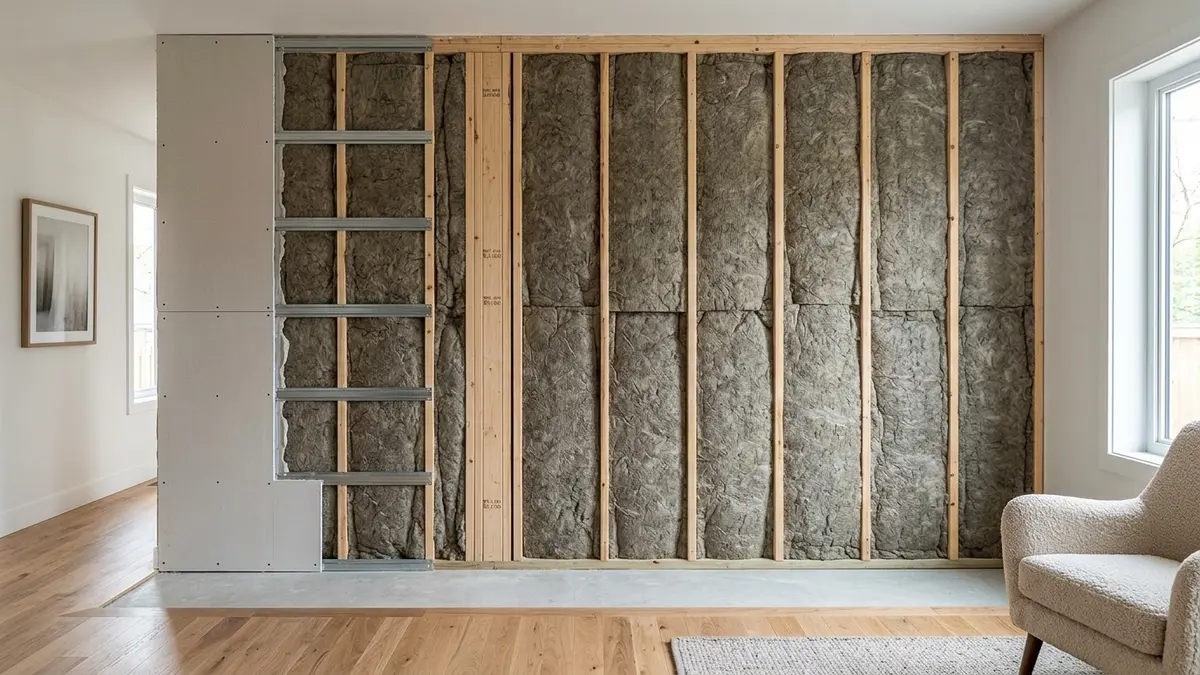
You might be surprised by how much noise passes through hollow wall cavities. Filling these voids with mineral wool insulation is one of the most cost-effective ways to improve soundproofing. Unlike traditional fiberglass, mineral wool is denser and specifically designed to absorb sound. When we open up a wall for a remodel, this is always the first improvement we suggest to our clients.

3. Resilient Channels and Isolation Clips

This is where decoupling comes into play. By installing resilient channels or isolation clips, you essentially create a “floating” wall surface. The drywall is attached to these channels rather than the studs themselves. Because the drywall is no longer in direct contact with the wood framing, vibrations are stopped in their tracks before they can move from one room to another.

4. Sealing the Flanking Paths

Even the best-insulated wall will fail if there are gaps where sound can “leak.” These are known as flanking paths. Common culprits include electrical outlets, baseboards, and the gaps around door frames. Using acoustic sealant—a high-quality, non-hardening caulk—to seal every perimeter gap is essential. If you don’t stop the air leaks, you don’t stop the noise.

Why Professional Installation Matters

While DIY solutions exist, soundproofing is an exact science. Small mistakes, such as leaving a gap at the bottom of the drywall or screwing into a stud through a sound-dampening channel, can completely undermine the effectiveness of your materials. It is a common misconception that simply buying expensive materials will lead to a quiet room; the installation technique is equally, if not more, important. At Lopez Chavarria Construction, we take a holistic approach to your home’s acoustics. We look at the architecture of the space, identify the primary sound sources, and utilize industry-standard techniques to ensure your renovation achieves the desired result.

Final Thoughts: A Quieter Home Awaits

Creating a soundproof sanctuary is more than just a renovation project; it is an investment in your peace of mind. Whether you are looking to dampen the sound of a home office or create a theater-grade media room, proper planning and execution are key. By addressing mass, insulation, and decoupling, you can transform your noisy living spaces into zones of tranquility. Are you ready to improve the acoustics of your home? The team at Lopez Chavarria Construction is here to help you navigate the process. Contact us today to discuss your project and let us show you how we can bring professional craftsmanship to your next renovation. Let’s build a quieter, more comfortable home together.

No comment

Leave a Reply

Your email address will not be published. Required fields are marked *