

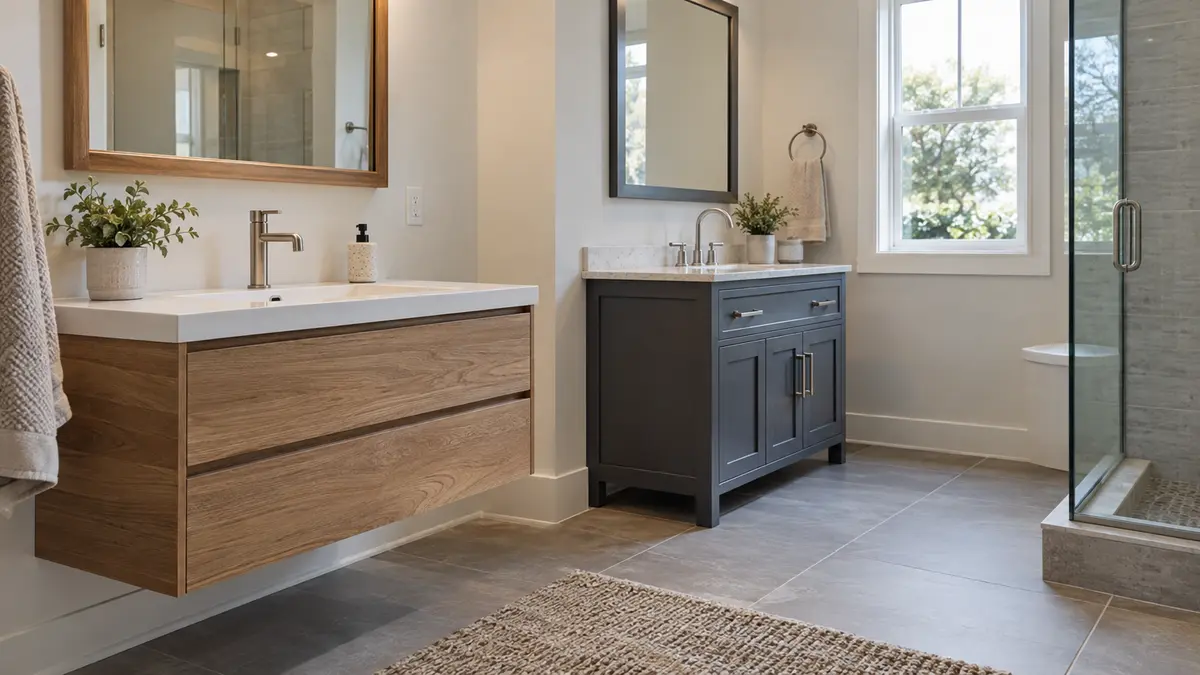
Choosing a bathroom vanity is one of the most important decisions in any bathroom remodel. The vanity anchors the room visually, provides essential storage, and affects how the space functions every day. Two of the most popular options are floating (wall-mounted) vanities and freestanding (floor-mounted) vanities. When homeowners weigh a floating vanity vs freestanding model, the decision usually comes down to installation requirements, overall cost, storage needs, and design preferences. In this guide, the team at Lopez Chavarria Construction breaks down the key differences to help you make an informed choice for your home.
What Is a Floating Vanity?
A floating vanity is mounted directly to the wall, leaving open space between the bottom of the cabinet and the floor. This design creates a clean, modern look and can make a small bathroom feel larger and more open. Floating vanities are popular in contemporary and minimalist bathroom designs.
What Is a Freestanding Vanity?
A freestanding vanity rests on the floor, either on a solid base or on legs. It resembles a traditional piece of furniture and works well across many design styles, from classic and farmhouse to transitional. Because it is supported by the floor, a freestanding vanity typically offers more storage capacity and a more straightforward installation.
Installation Comparison
Installing a Floating Vanity
Floating vanity installation is generally more involved. Because the entire weight of the cabinet, countertop, sink, and everything stored inside is carried by the wall, proper support is critical. Installation often requires:
- Wall reinforcement: Blocking or backing is usually added between wall studs to support the vanity securely.
- Plumbing adjustments: Supply lines and drain connections may need to be relocated so they are hidden within the cabinet or the wall, since exposed pipes are visible beneath a floating unit.
- Precise leveling and mounting: The vanity must be mounted at the correct height and perfectly level, which requires careful measurement.
- Wall and floor finishing: Because the floor beneath the vanity remains visible, flooring must extend fully under the unit.
In many cases, these steps involve opening the wall, which adds labor and may require drywall repair and refinishing.
Installing a Freestanding Vanity
Freestanding vanities are typically simpler to install. The unit sits on the floor, is leveled, and is usually secured to the wall for stability. Existing plumbing often works with little or no modification because the cabinet body conceals the pipes. This makes freestanding vanities a practical choice for homeowners who want to update their bathroom without significant structural or plumbing changes.
Cost Comparison
When comparing a floating vanity vs freestanding vanity, it is important to consider both the price of the unit and the cost of installation.
Product Cost
Both styles are available across a wide range of price points depending on materials, size, countertop selection, and brand. A basic model of either type can be budget-friendly, while custom cabinetry and premium countertops will increase the cost for both.
Installation Cost
Installation is where the difference typically shows. Floating vanities often cost more to install because of the additional labor involved in wall reinforcement, plumbing relocation, and finishing work. Freestanding vanities usually require less labor, which can keep overall project costs lower. Factors that influence installation costs for either option include:
- The condition and layout of existing plumbing
- Whether walls need to be opened or reinforced
- Flooring updates needed beneath or around the vanity
- Countertop material and sink configuration
- The size and weight of the vanity
Pros and Cons at a Glance
Floating Vanity
- Pros: Modern appearance, makes small bathrooms feel larger, easier floor cleaning, customizable mounting height
- Cons: More complex installation, potentially higher labor costs, generally less storage space
Freestanding Vanity
- Pros: Simpler installation, more storage capacity, works with many design styles, often more budget-friendly to install
- Cons: Can make smaller spaces feel heavier, harder to clean underneath models with legs, less flexibility in height
Which Vanity Is Right for Your Bathroom?
To decide between the two, consider these questions:
- How much storage do you need? If storage is a top priority, a freestanding vanity usually offers more room.
- What is your budget? If you want to minimize installation costs, a freestanding unit is often the more economical option.
- What design style do you prefer? Floating vanities suit sleek, modern spaces, while freestanding vanities complement traditional and transitional designs.
- How large is your bathroom? In compact bathrooms, a floating vanity can create a more open, airy feel.
- Are you already remodeling walls or plumbing? If your project includes opening walls, adding the support needed for a floating vanity may be more practical.
Make the Right Choice With Lopez Chavarria Construction
Both floating and freestanding vanities can transform your bathroom, and the best choice depends on your space, budget, and personal style. Understanding the installation and cost differences in the floating vanity vs freestanding debate helps you plan a remodel that meets your needs and looks great for years to come.
If you are planning a bathroom update and want expert guidance on selecting and installing the right vanity, Lopez Chavarria Construction is here to help. Contact us today to discuss your project and take the next step toward the bathroom you have been envisioning.



No comment