
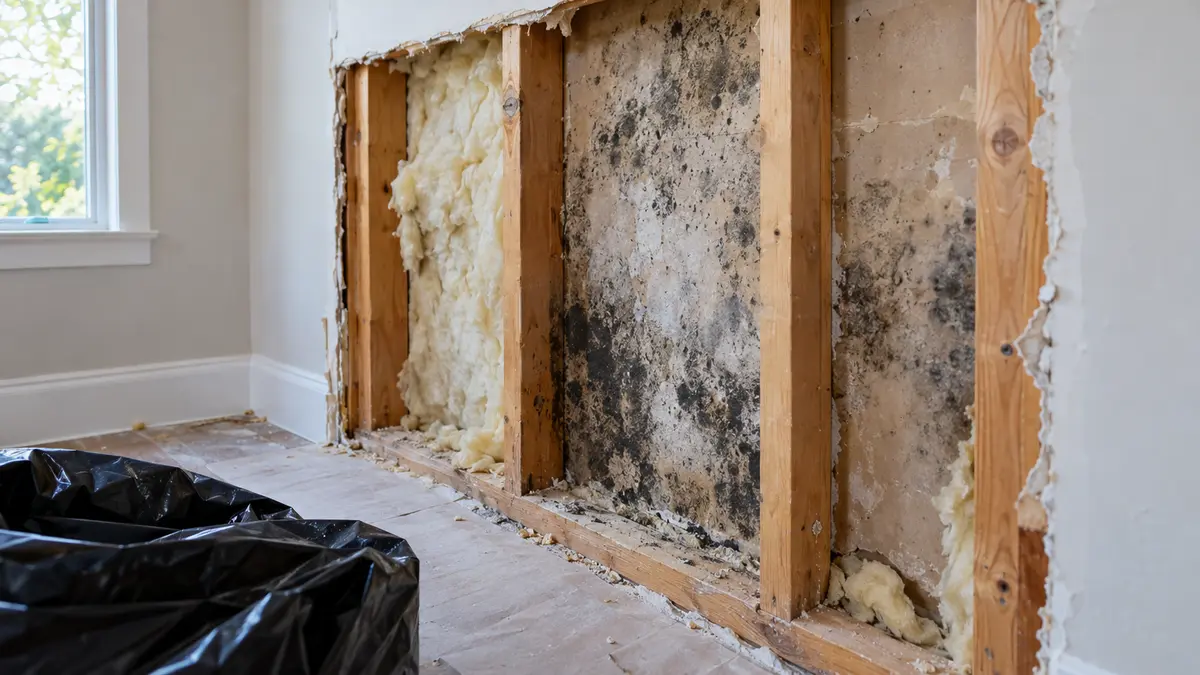
Mold rarely announces itself. More often, it grows quietly inside wall cavities, feeding on moisture and the paper facing of drywall long before anyone notices a stain or a musty smell. By the time visible signs appear, the problem may have spread well beyond what you can see. Understanding how to recognize hidden mold, how proper mold on drywall removal works, and how to prevent it from returning can protect both your home and the people living in it.
Why Mold Grows Behind Drywall
Drywall is made of a gypsum core wrapped in paper, and that paper is an ideal food source for mold. Add moisture, warmth, and limited airflow, which are conditions common inside wall cavities, and mold can establish itself quickly. Common sources of moisture include:
- Plumbing leaks from supply lines, drain pipes, or fixtures behind walls
- Roof or window leaks that allow water to travel down framing
- Condensation on cold pipes or exterior walls with poor insulation
- Flooding or water intrusion that was not fully dried
- High indoor humidity in bathrooms, kitchens, and basements without adequate ventilation
How to Spot Hidden Mold
Because mold behind drywall is often out of sight, you need to watch for indirect clues. Paying attention early can make the difference between a small repair and a larger project.
Visual Warning Signs
- Discoloration, dark spots, or yellowish stains on walls or ceilings
- Peeling, bubbling, or cracking paint
- Warped, soft, or bulging drywall
- Water stains near baseboards, windows, or plumbing fixtures
Other Indicators
- A persistent musty or earthy odor that does not go away with cleaning
- Allergy-like symptoms that seem worse in certain rooms
- A history of leaks or water damage in the area
- Drywall that feels damp or cool to the touch
If you notice one or more of these signs, it is worth investigating further. A moisture meter can help identify damp areas, but confirming mold inside a wall often requires opening the drywall.
The Mold on Drywall Removal Process
Unlike hard, non-porous surfaces, drywall cannot be reliably cleaned once mold has penetrated it. In most cases, effective mold on drywall removal means cutting out and replacing the affected material. A careful approach generally follows these steps:
- Identify and stop the moisture source. Removing mold without fixing the leak or humidity issue will only lead to regrowth.
- Contain the work area. Plastic sheeting and sealed doorways help keep mold spores from spreading to other parts of the home.
- Use protective equipment. Gloves, eye protection, and a properly rated respirator reduce exposure during removal.
- Remove damaged drywall. Affected sections are cut out, typically extending beyond visible growth to capture hidden contamination.
- Inspect and treat framing. Wood studs and insulation behind the wall are checked. Contaminated insulation is usually replaced, and framing is cleaned and dried.
- Dry the area thoroughly. Fans and dehumidifiers help ensure the cavity is completely dry before closing it up.
- Install new drywall and finish. Once the area is dry and clean, new drywall is hung, taped, finished, and painted.
For small, isolated areas, some homeowners choose to handle the work themselves. However, larger areas of growth, mold connected to HVAC systems, or contamination following significant water damage are best addressed by professionals with the right tools and experience.
How to Keep Mold From Coming Back
Prevention is ultimately about controlling moisture. Once your walls have been repaired, these habits can help reduce the chance of mold returning:
- Repair leaks promptly. Address dripping fixtures, roof issues, and window seal failures as soon as they appear.
- Manage indoor humidity. Aim to keep humidity levels in a moderate range, using dehumidifiers where needed.
- Improve ventilation. Run exhaust fans in bathrooms and kitchens during and after use.
- Consider moisture-resistant materials. In bathrooms, laundry rooms, and basements, moisture- and mold-resistant drywall products can be a smart choice.
- Insulate cold surfaces. Insulating pipes and exterior walls helps reduce condensation.
- Inspect regularly. Check under sinks, around appliances, and near windows for early signs of moisture.
Protect Your Home With Expert Help
Mold behind drywall is more than a cosmetic issue. Left unaddressed, it can damage building materials and affect indoor air quality. Recognizing the warning signs early, removing contaminated materials properly, and correcting the moisture problem at its source are the keys to a lasting solution.
If you suspect mold is hiding in your walls or you need damaged drywall repaired, Lopez Chavarria Construction is ready to help you take the next step. Contact us today to discuss your project and learn how we can help restore your walls and support a healthier home.

No comment